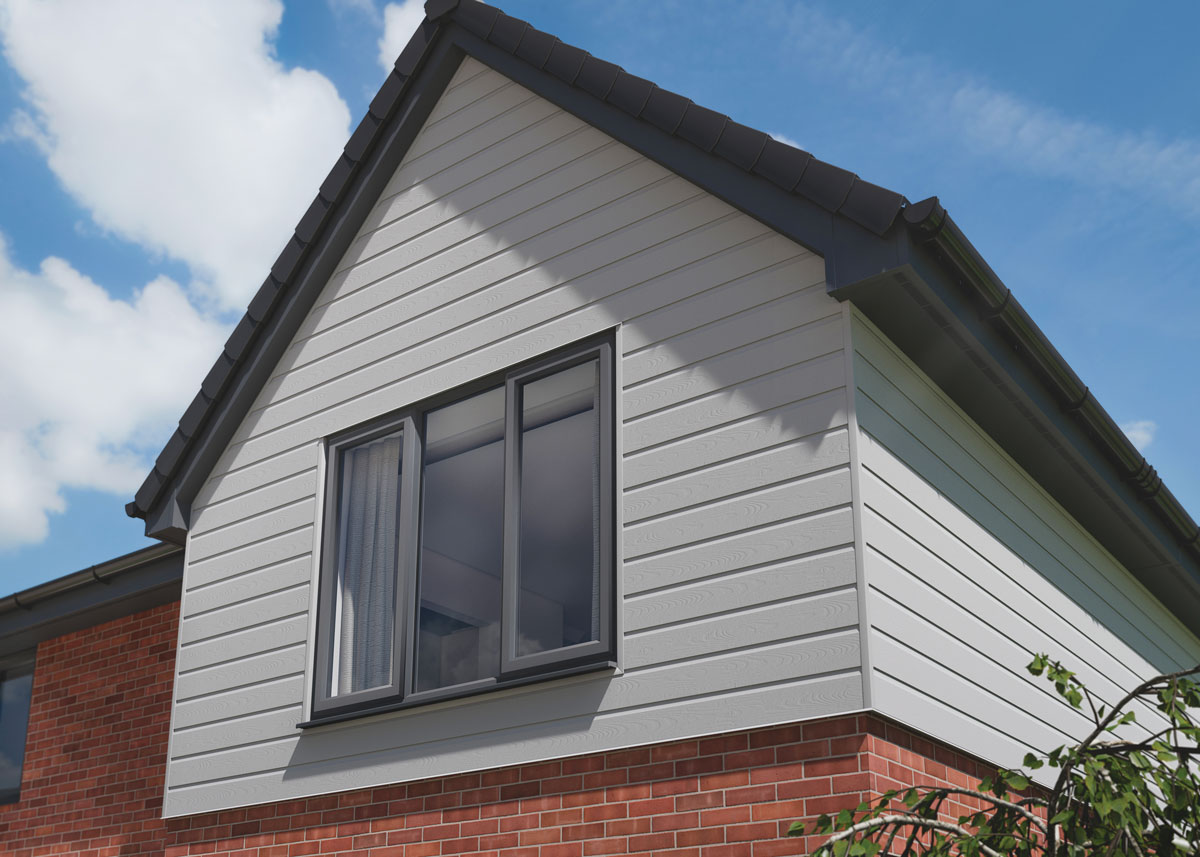
PVC external cladding offers a great alternative to traditional timber cladding. It is durable and long-lasting, providing protection against the elements while also adding an attractive and stylish feature to your home.
We offer a wide selection of PVC cladding available in various designs and colours. Whether you prefer shiplap, open V joint, woodgrain textured effect, a classic white or light brown, or even contemporary anthracite grey or black wood, you can find a PVC cladding option that suits your taste and complements your home.
Key Benefits
Regardless of the design you choose, this cladding is:
Weather-proof: Built to withstand the elements.
Low Maintenance: No need for constant sanding or painting.
Durable: Resistant to fading or discolouration over time.
To view the range of PVC cladding in person, you are invited to visit your local showroom and speak with our friendly team members.
What are the different types of UPVC Cladding for exteriors?
UPVC cladding comes in three main types: Shiplap, Open V Joint, and Featheredge. All of these types provide protection against the elements and can be used to enhance the appearance of your property or replace deteriorating timber boards. Shiplap cladding features an overlapping design that aids water runoff and is often chosen for larger projects or when the overlapping style is preferred. Open V joint cladding has a symmetrical V joint that gives a modern finish, while featheredge cladding mimics the look of traditional timber cladding without the need for extensive maintenance.
What styles of PVC cladding are available?
There is a wide variety of designs and colours available in the market. The first option is plain cladding, often available in white. For a realistic wood effect, you can choose woodgrain textured external cladding. This PVC alternative to timber is just as visually appealing as wood but requires less maintenance and lasts longer. Another option is woodgrain external PVC cladding, which accurately emulates the appearance of wood cladding. Whether your home is a country cottage, a 60’s semi, or a modern mansion, there is PVC cladding to suit your style.
How do I install external PVC cladding?
Installing external PVC cladding not only enhances the look of your home but also provides an additional layer of protection against the elements. It is an excellent alternative to traditional timber, as it offers the same aesthetic appeal while being low maintenance and long-lasting. The key to a successful installation is proper preparation, which includes ensuring a sound substrate, using high-quality battens (treated timber), insulation (if needed), and a vapour membrane. If you are replacing existing cladding, it’s important to remove all old materials before installing the new cladding. It’s also essential to consider the differences between white and colour/foil cladding, as the installation guidance may vary slightly for each.
How do you measure UPVC external cladding?
Calculating basic square areas for cladding is straightforward. Measure the height and width of the area and multiply by the following factors based on the chosen profile:
For 100mm claddings: square meters (m²) x 2 = number of lengths required to cover the area.
For 125mm claddings: square meters (m²) x 1.6 = number of lengths required to cover the area.
For 150mm claddings: square meters (m²) x 1.4 = number of lengths required to cover the area.
For 300mm claddings: square meters (m²) x 0.7 = number of lengths required to cover the area.
For example, if you’re cladding an area that is 6m wide x 3m high using 150mm Shiplap, the calculation would be 18m² x 1.4 = 12.6 = 13 x 5m length. If the area includes windows, doors, or other non-clad sections, you can use the same calculation method but subtract those areas from the overall number of lengths required. Keep in mind that these calculations do not account for cutting wastage on-site or the use of offcuts and joints to achieve a uniform design. Creating a sketch of the area, including non-clad sections, and applying lengths accordingly will help you determine the best fit for offcuts.
What are the benefits of UPVC cladding?
PVC external cladding acts as a protective “skin” for your home. It adds an extra layer of insulation, minimizing air leakage and improving energy efficiency and running costs. PVC cladding is available in a wide range of colours, from traditional white and cream to contemporary grey and light blue, allowing you to enhance the aesthetic appeal or revitalize the look of your home. For more information on how PVC cladding can protect your home, the different styles available, and installation tips, please visit our blog.
 Call Now